How To Build Trust in a Low-Trust Industry


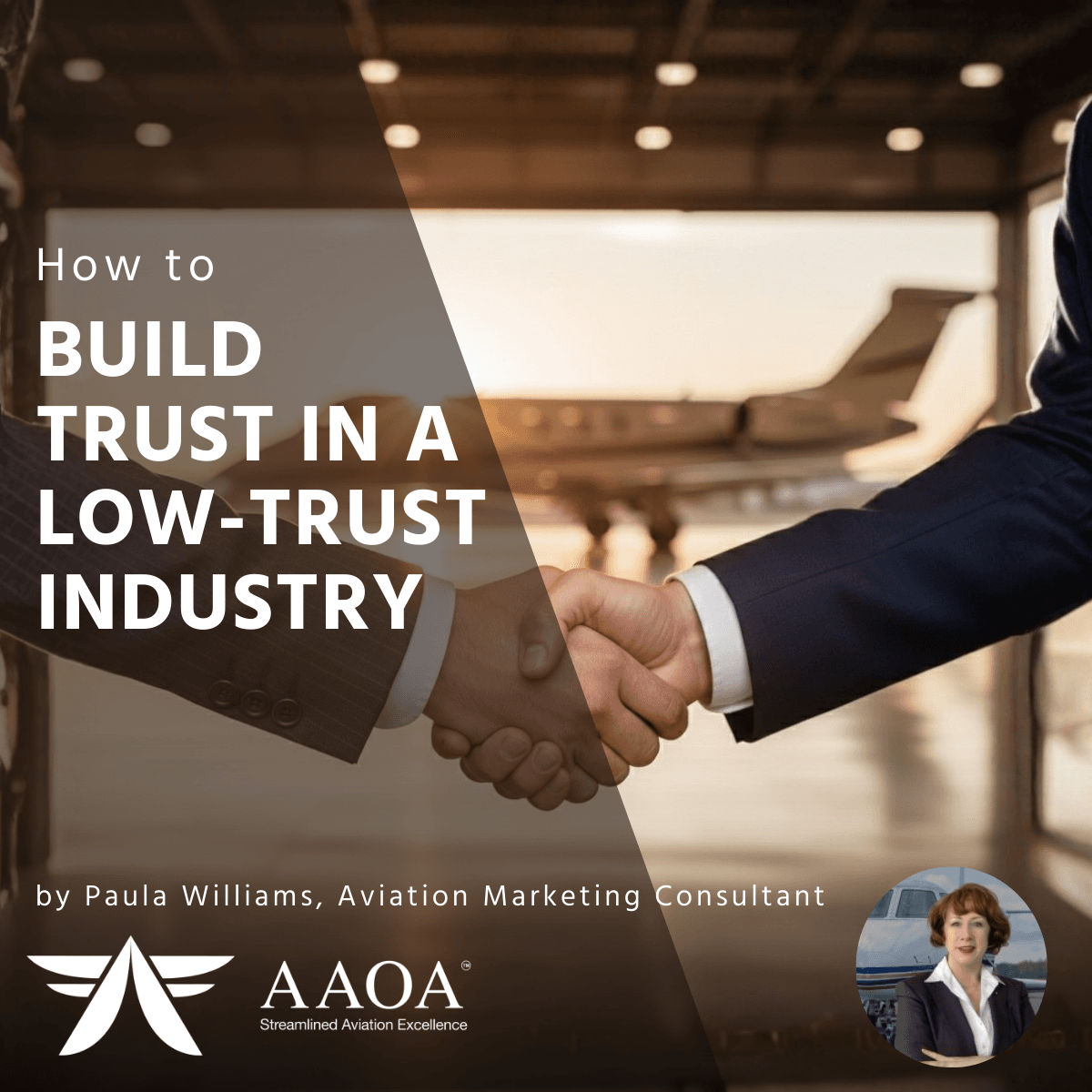
In business aviation, trust isn’t a luxury—it’s currency. Yet despite its critical importance, we operate in a space where trust is routinely undermined: opaque pricing, unclear roles in transactions, minimal public accountability, and a culture of discretion that often borders on secrecy.
The irony? Most providers in this industry are incredibly competent and principled. But their messaging doesn’t reflect that. Their online presence is minimal. Their referrals happen in closed loops. And they suffer reputational damage not because they did something wrong, but because they failed to communicate what they do right.
In short: we have a trust problem, and we can’t market our way out of it with buzzwords.
What Builds Trust in Aviation?
Let’s start with what works. Trust-building isn’t mysterious. It’s a combination of consistency, transparency, and professionalism—executed in the open.
Here are specific behaviors that reliably build trust in the business aviation world:
Clarity in Role & Value
Don’t assume people know what a records consultant does. Don’t expect them to understand the difference between title insurance and risk insurance. Be direct. Say: "I help protect buyers from six-figure mistakes during aircraft purchases."
Client Education
The best professionals don’t hoard knowledge. They share it. Whether it's a LinkedIn post about ownership costs or a 10-minute webinar on avoiding fraud, every act of teaching signals competence and generosity.
Third-Party Validation
Reviews, testimonials, referrals, industry awards—these are your social proof. If you’re not asking clients for testimonials, you’re leaving trust on the table. No one believes "we’re the best" if you’re the only one saying it.
Visibility Without Vanity
Be present, not promotional. Regular social posts, thoughtful comments, short articles, and updates on your work all build familiarity. Familiarity breeds trust.
Alignment with Other Trusted Professionals
Trust is contagious. When your name appears alongside respected peers, or you're part of a vetted alliance like AAOA, it creates a halo effect.
What Erodes Trust?
Just as important: knowing what undermines trust.
Silence
In an era where even aircraft buyers Google you, having no photos of people on your website, no personal social presence, or a skimpy LinkedIn profile looks like you're hiding.
Overpromising
If you claim you can "handle every aspect of an aircraft transaction," but you don’t clarify that you outsource legal work, you’re misleading clients—even if unintentionally.
Unverified Testimonials
Generic praise, and fake reviews are worse than none at all. People can spot fluff. They also understand the need for confidentiality, so real testimonials from people who don't want to be publicly named are undertstandable.
Inconsistent Branding
If your website says one thing, your LinkedIn another, and your business card a third, you look disorganized. Disorganization breeds doubt.
Association With Known Bad Actors
If you frequently partner with firms known for cutting corners or pushing legal boundaries, your credibility suffers by proximity.
A Better Path Forward
Trust in aviation isn’t just about doing the work. It’s about being seen doing it well.
The professionals we work with in AAOA are often the best in their field—but they’re invisible outside their referral circle. That’s a strategic liability.
If we want to improve this industry’s reputation, grow our individual businesses, and elevate standards across the board, we need to make trust visible.
That means:
Showing up online
Sharing real stories and results
Partnering with others who hold the line on ethics
Making it easy for clients to find, verify, and work with us
Because in a low-trust industry, the professionals who prove they’re trustworthy will lead the next era of aviation.
About the Author
Paula Williams is the co-founder of Aviation Business Consultants International (ABCI) and a Founding Member of the Aviation Acquisition & Operations Alliance (AAOA). She helps aviation companies clarify their message, grow their audience, and build the kind of reputations that drive referrals and repeat business.